
Passion
Agreeing to a life most people would reject on sight.

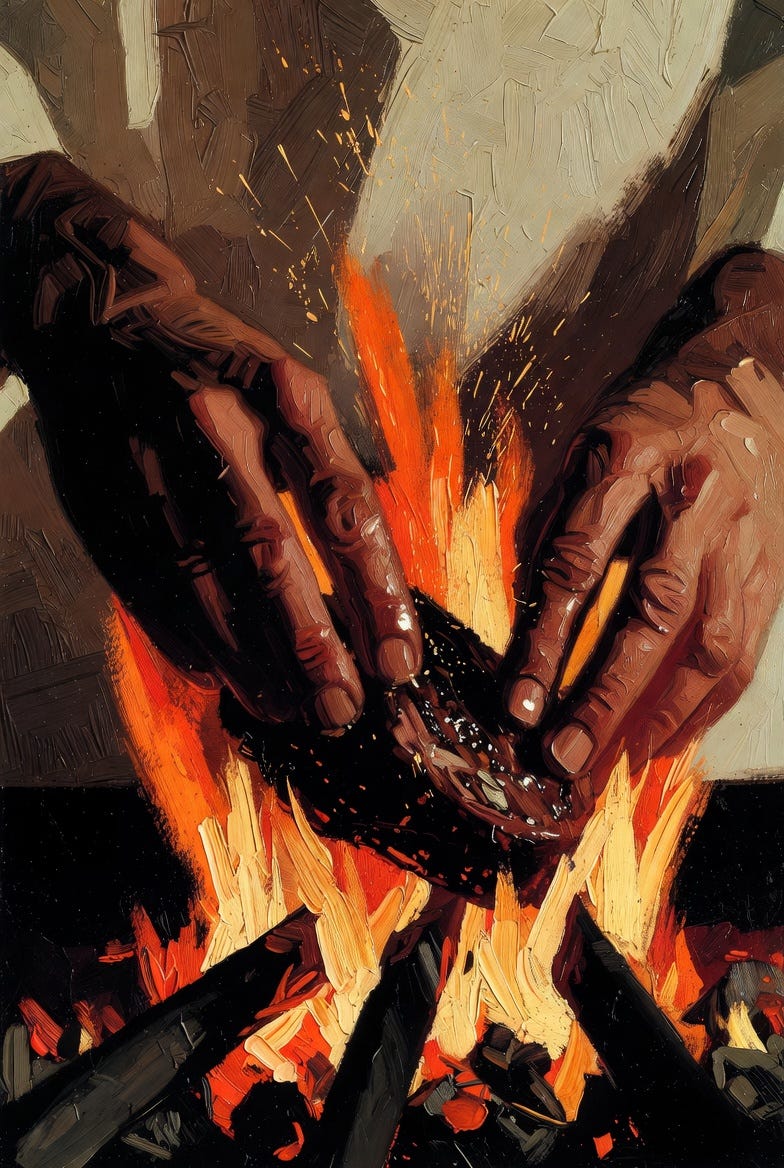
Being a chef means agreeing to a life most people would reject on sight.
Early starts. Long hours. Heat that never lets up. Repetition that grinds the days flat. Your body hurts in places you didn’t know could hurt, and tomorrow looks exactly like today. From the outside, though, you learn to wear the smile. You pass through the dining room like an actor between scenes, shake hands, answer questions, accept thanks for what might be the best meal someone has had all year.
Back in the kitchen, nothing has changed.
At the beginning, you don’t mind. In fact, you tell yourself this is what you want. You don’t have the smile yet, but you have the hours. You have the work. The pay is basic, the conditions are worse, and none of that seems to matter because you have something else.
You have passion.
Passion is what lets you sign a forty-hour contract and work eighty without protest. It’s what convinces you that abuse is training, that exhaustion is character-building, that turning up before dawn is proof you belong. Passion fills the space where experience hasn’t arrived yet. It makes ignorance feel like commitment.
At this stage, passion is useful. It keeps you moving. It stops you asking questions you don’t yet know how to answer.
That’s why it works.
Personal Vignette
Let me start with my own story.
I was thirteen and I needed a job. No—that’s not quite right. I had to have a job, and the job I wanted was in a kitchen. From an early age, being a chef was the plan. Not a fantasy. A decision.
School had already made its position clear. I learned very little beyond this: I didn’t like authority, the system wasn’t designed for people like me, and if you wanted to get anywhere you’d have to bend it—quietly, repeatedly, and without getting caught. In hindsight, a professional kitchen was a natural habitat for someone with those instincts.
One afternoon I put on my best clothes, made myself presentable, and walked into the best restaurant in town. I went straight to the front desk and asked to speak to the owner.
The man behind the desk raised an eyebrow. Did I have an appointment?
No. But I thought I had something they might want.
He paused, then asked what that was.
I said I should probably explain it to the owner.
He sighed, stepped out from behind the desk, and motioned for me to follow. I trailed behind him like a dog that hadn’t yet learned when to stop.
When I met the owner, I told her I wanted a job. I said I was hard-working, respectful, and honest. Kitchens would take care of the rest.
She looked at me the way people look at animals they’re deciding whether to put down.
How old are you?
Thirteen—but I’m tall for my age and could pass for sixteen. The reply came out quickly. It had already been rehearsed.
She nodded once.
Fine. You start Friday. Collecting glasses and anything else that needs doing. Be here at seven. On the dot.
That was it. No paperwork. No questions. And that’s how I stepped onto a road that led in several directions, not all of them elevating.
It was passion that made me walk into that restaurant. Passion that made me stay. And passion that stopped me asking questions I didn’t yet know were necessary—about pay, hours, or why no one seemed concerned about the man in the corner who watched me like a well-cooked chop.
Not asking became a habit, the abnormal became normal, a knife being pulled on someone, the bar manager fucking the new waitress in the back room, money and produce being stolen. I saw nothing and told no one, I might get in trouble, get sacked and then what? Passion is also what kept me coming back after many violent chefs took out their frustrations on me. There was a point when getting shouted at was like having a day off. This isnt a pity party, I’m just saying if you have passion, you will put up with a lot of nonsense because you view the payoff as greater than the shit you have to eat.
So if passion is cheap, flexible, and easily abused, does that make it wrong?
As I moved through the job, I learned the game. Passion gave way to knowledge. Knowledge to judgment. I learned when to step clear of the roadside bombs and when to walk straight into the fight. Life became less about how badly I wanted something and more about craft, discipline, and order. As I rose through the ranks, I also became part of the problem. There’s no noble way to say that. Monkey see, monkey do.
The distance from passion wasn’t all loss. It gave me a working sense of right and wrong. It gave me the confidence to stop behaviour that shouldn’t be tolerated, to step outside with another chef and settle an argument the old-fashioned way, and to see clearly how the business of food actually functions. Passion has no place on the pass during service. If you think it does, you’re a donkey. This isn’t an episode of Chef’s Table. This is a Saturday night and forty covers are already late.
What’s strange is that this expectation exists almost nowhere else. No one asks a car mechanic what part of fixing brakes they enjoy most on their day off. No one tells an accountant they must be deeply passionate to survive spreadsheets. No one says they love visiting bank branches because the manager there clearly adores his work. But chefs are expected to want it all the time.
We don’t. We want a day off.
My favourite thing to cook for myself is beans straight from the tin. That doesn’t mean I don’t enjoy cooking. I do. But mostly I get paid to do it, and when I’m not being paid, I’d prefer not to turn my kitchen into a stage set.
Television and films tell a different story. Two young chefs stand in a spotless home kitchen, stainless steel counters gleaming, a Thermomix humming in the background. They riff on ideas, throw flavours together, and somewhere between the second glass of wine and the third clever garnish, the menu clicks into place. That’s the moment, apparently, where greatness is born.
I’ve never seen this happen. Not once.
What those stories leave out is the work. The repetition. The prep that starts before dawn. The person peeling shallots without conversation. If everyone in a real kitchen behaved the way television chefs do, there would be no one left actually getting food onto the plate.
This can sound like bitterness if you skim it. It isn’t. It’s observation. Passion gets you started. It keeps you moving before you understand what the job will take. But if you mistake it for a permanent state, it will hollow you out. Ten months in, most cooks are still passionate. Ten years in, much of that has been burned away—not by failure, but by exposure.
What remains is what matters.
So What Remains
After passion has done its work—after it has been spent, misused, and burned away—something else is left behind. It isn’t enthusiasm. It isn’t excitement. It isn’t even love in the way people usually mean it.
What remains is the willingness to return.
There’s an old saying, often attributed to Japan, though it could belong anywhere that values repetition over romance: passion may start the journey, but dedication to mastery is what keeps you on the road. The point isn’t the quote. The point is the distinction. Passion moves quickly and loudly. Mastery advances slowly, usually without witnesses.
By this stage, passion has lost its innocence. It’s no longer enough to want the work. Wanting it doesn’t get you through the day. What does is care for detail, intolerance for sloppiness, and a refusal to accept that “good enough” is good enough. Improvement becomes the motive force. Dissatisfaction becomes useful.
This is where craft lives.
Look at any kitchen that genuinely changed the way people cook or eat—El Bulli, The Fat Duck, Noma. Passion may have been present at the beginning, but it was never sufficient. What followed was obsession, structure, repetition, and years of unglamorous work. These places didn’t become great because someone felt deeply. They became great because people showed up, every day, and did the same difficult things better than the day before.
That work was not evenly rewarded. It was often underpaid, sometimes unpaid, and frequently justified with the language of passion. Young cooks arrived early, stayed late, and accepted conditions they would later recognise as untenable. They believed they were part of something larger. In many cases, they were right. But belief alone was never the engine. The engine was discipline—applied relentlessly, often invisibly, by people who would never put their names on the door.
This is the uncomfortable part of the story, but it matters. Greatness is not powered by passion alone. It is built on systems, repetition, and labour that rarely looks heroic in the moment. Passion may get people through the door. Craft decides what survives.
At the far end of a long career, something curious happens. The noise falls away. The need to prove yourself weakens. What returns isn’t the feverish passion of the early years, but something quieter and more precise. You care about fundamentals again. You wash the rice properly. You sharpen the knife even when no one is watching. You correct small errors before they become habits.
This is not a return to innocence. It’s a return to seriousness.
The danger isn’t losing passion. Most people do, and often for good reason. The danger is losing respect for the work itself. When that happens, nothing replaces it. The job becomes hollow, then hostile, then unbearable.
The people who last are not the most passionate. They are the ones who learn what to keep. They hold on to the part of passion that existed before applause, before exhaustion, before identity got tangled up in outcome. What remains isn’t fire. It’s care. And care, applied consistently over time, is what mastery actually looks like.
Another well crafted piece of practicality and searing truth.
Your entrance into the adult world began at the age of thirteen (and probably well before) ...I loved your first job interview and the description of following like a dog who hadn't learned to stop! Obviously, your craft and expertise has been hard won. Bravo chef...I love your essays.
May God bless and protect you and your family. You are married to a very accomplished writer...this I know....you make a great team!
Well cooked, Well said.