
Water
Torture or Salvation

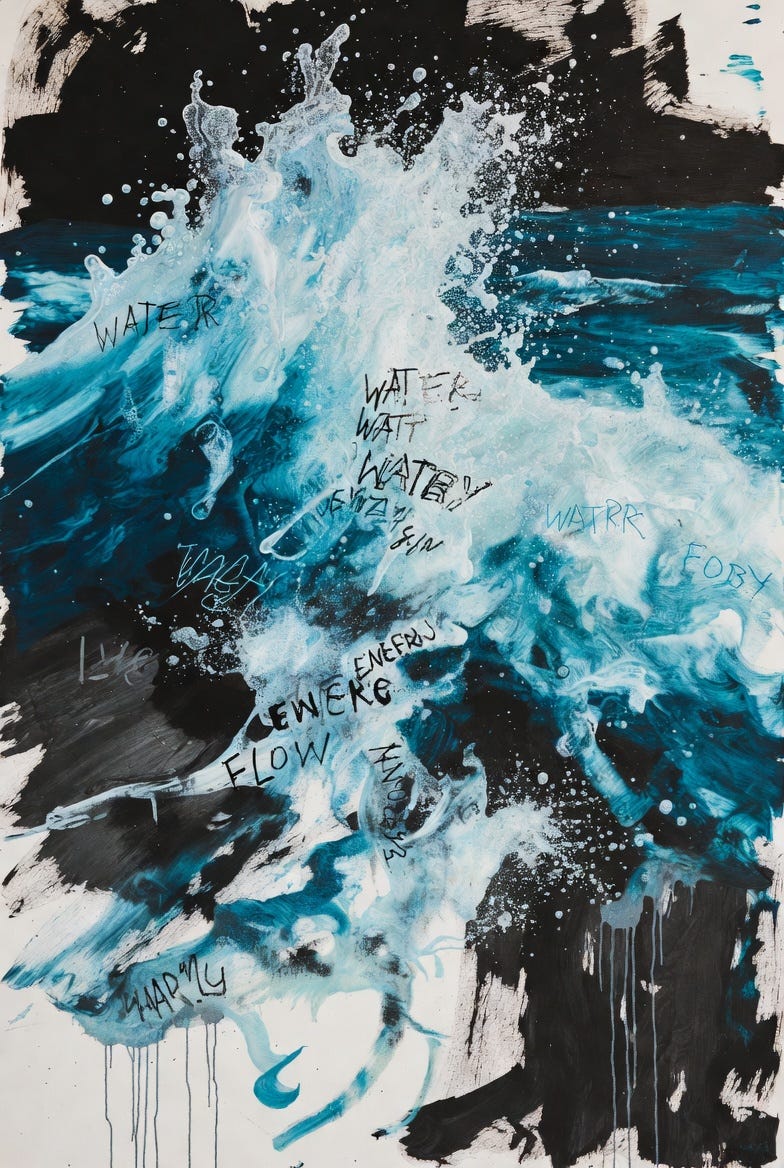
You’re standing in the supermarket water aisle, staring at rows of bottles, wondering if any of this actually matters—or if it’s all just marketing.
Water is the most used ingredient in the kitchen, and also the most overlooked.
And when it does receive attention, it’s usually the wrong kind.
Let me give you an example.
Carottes Vichy is a classic French dish from the town of Vichy. What makes it special is not the carrot, nor the butter, nor the sugar. It’s the water. Vichy water is naturally mineral-rich and lightly effervescent, with a specific composition that changes how vegetables cook and taste.
The modern cook reads this and thinks: fizzy water.
Job done.
No. All you’ve done is waste CO₂.
Here’s another example.
Heston Blumenthal’s fish and chips batter achieves its lightness by replacing water with vodka, adding bicarbonate, and charging the mixture with CO₂. The result is structural, not cosmetic: alcohol evaporates faster than water, reducing gluten formation; the gas expands under heat, creating lift.
The poorly read chef sees bubbles again and reaches for fizzy water.
Another waste of effort.
In both cases, the mistake is the same: surface imitation without understanding. Bubbles are not the point. Water is not interchangeable. What matters is how water behaves, what it carries, and what it allows to happen.
So why does water matter at all?
Because when it works, nothing calls attention to it. Its success is the very reason it’s overlooked.
Water, According to Reality
As On Food and Cooking makes clear, water isn’t neutral. It is the medium through which almost all cooking happens. Heat moves through it. Flavour dissolves into it. Structure depends on how it behaves.
Water does three things in the kitchen, whether you notice or not.
First, it transfers heat.
Boiling, steaming, poaching—all rely on water’s ability to absorb and distribute energy evenly. This is why food cooked in water behaves differently than food cooked in fat or air. Water limits temperature. It caps aggression. You can’t brown food in water because it never gets hot enough. That’s not a flaw. It’s restraint built into physics.
Second, it dissolves and carries flavour.
Salt, sugar, acids, aromatics—none of them move without water. Stocks aren’t flavoured liquids; they are solutions. Remove water and flavour concentrates. Add too much and it disappears. Reduction works because dilution kills. Water isn’t flavour—it’s the vehicle that decides how loud flavour is allowed to speak.
Third, it controls structure.
Proteins tighten in the presence of heat and moisture. Starches swell when water enters their granules. Vegetables soften not because they are “cooked,” but because water penetrates their cell walls and weakens them from within. How much water, how hot it is, and how long it stays determines whether food becomes tender, chalky, or collapses entirely.
This is where people get confused.
They treat water as absence. As nothing. As the thing you add when you don’t want flavour. But water is never doing nothing. It is always acting—constructively or destructively—depending on how you let it behave.
McGee’s point, repeated throughout his work, is that cooking failures are rarely mysterious. They are usually the result of water being misunderstood: too much, too little, too hot, too cold, too fast, too long.
Water rarely announces success.
It only makes itself known when it’s been mishandled.
Water as Art
I admire Massimo Bottura’s saucing on Beautiful Psychedelic Veal, Not Flame-Grilled. The sauces are applied abstractly—spin-painted arcs and deliberate splashes that look impulsive until you realise they stop exactly where they must. It’s a high-risk act. A moment’s hesitation, a spoon overloaded by a gram, and the plate collapses.
What most people notice is the movement. What they miss is why the sauces behave the way they do.
Each colour, each flavour, is held at a precise viscosity. Thin enough to move. Thick enough to stop. Concentrated enough to speak clearly without flooding the plate. The eye reads freedom; the palate reads control. That balance isn’t aesthetic instinct. It’s water management.
Water decides whether a sauce stains or sits.
Whether it bleeds into the protein or frames it.
Whether colour vibrates or dulls.
Too much, and the plate turns into runoff. Too little, and the sauce congeals into paste. What makes the dish cohere—what allows the chaos to hold—is how much water is permitted to remain.
I’ve watched chefs try to replicate this technique. It’s embarrassing. They saw a photograph and mistook appearance for method. The result is always the same: over-thick sauces leaking out from under the protein, pooling at the rim, smearing intention across the plate. The problem isn’t their hand. It’s their understanding.
This is style mistaken for substance.
To make something look organic is hard. To make it look accidental is harder. To make chaos appear ordered—to remove the visible trace of the chef’s hand entirely—is the real trick. That only happens when restraint is total and attention absolute.
If you still don’t think water is important, we could ask a sushi chefs. Their know craft and at the highest level—those counters where nothing moves without reason—chefs will tell you plainly: water isn’t background. It’s the foundation. Forget the fish for a moment. The rice carries everything, and rice is nothing if not receptive.
During the rinse, the soak, the long steam in donabe or hagama, water enters the grain completely. It determines texture, sweetness, cohesion. It decides how the shari (rice) holds together in the hand and how it yields under pressure. Change the water and you change the rice. There’s no way around it.
Use hard water or water loaded with minerals and the balance fractures. You get stubborn firmness, a metallic edge, resistance where there should be compliance. It doesn’t matter how pristine the uni is or how carefully the toro has been aged—the harmony is gone before the fish even arrives.
This is why serious sushi chefs obsess over water profiles. Soft water. Low mineral content. Nothing that interferes. Some import it. Some hunt for local sources that match the pH and trace minerals they need. A minor shift alters how the rice absorbs seasoning, how it reflects light, how it meets the neta in that single, decisive bite.
There’s nothing showy about this. That’s the point.
Get the water wrong and the conversation between grain and fish never starts. Everything feels slightly off, as if the plate is missing a dimension you can’t name. The failure is complete.
Attention
Most people don’t fail because they choose badly. They fail because they stop looking.
In kitchens, water exposes this faster than anything else. It doesn’t flare up. It doesn’t announce a mistake. It just keeps working while you turn away. By the time you notice, the damage is already done—flavour washed out, structure collapsed, effort erased.
The same conditions apply beyond the kitchen. The things that matter most rarely demand drama. They sit in the background, shaping outcomes, waiting to be dismissed as neutral. Water teaches you that neutrality is a fiction. Every condition you accept without attention is still acting on you.
This is why experienced cooks don’t trust what “should be fine.” They watch. They taste. They adjust early, or they stop entirely. They understand that control isn’t about force; it’s about proximity. You stay close because distance is how things slip.
Attention isn’t a personality trait. It’s a choice you make repeatedly, often when nothing seems to be happening. Most people opt out at that moment. They assume nothing is being decided.
They’re wrong.
Water is deciding anyway.
A Practical Note on Sushi Rice and Water
If you want to understand why water matters, make sushi rice properly once.
Use bottled still water, not tap. Chlorine, chloramine, and dissolved minerals interfere with absorption and seasoning. Even if your tap water is “safe,” it is rarely neutral. Sushi rice exposes that immediately.
You will need
Japanese short-grain rice
Bottled still water (low mineral content)
Rice vinegar
Sugar
Salt
Method (concise and non-negotiable)
Wash the rice
Rinse gently in cold bottled water, changing it several times, until the runoff is mostly clear. Don’t scrub. You’re removing surface starch, not punishing the grain.Soak
Cover with fresh bottled water and soak for 20–30 minutes. Drain fully. This step matters.Cook
Use a 1:1.1 ratio of rice to bottled water. Cook in a donabe, heavy pot, or rice cooker. Bring to a boil, cover, reduce to low, and cook for 12–15 minutes. Do not lift the lid.Steam rest
Remove from heat and let sit, covered, for 10 minutes. The rice finishes itself here.Season
Warm rice vinegar with sugar and salt until dissolved. Fold gently into the rice using a cutting and lifting motion. Do not mash. Do not overwork.
If the water is wrong, none of this helps.
The rice will be firm when it should be yielding, dull when it should shine, resistant when it should comply.
This isn’t refinement.
It’s paying attention early, so nothing has to be forced later.
Great post!! I learned a lot!